Performance marketing
Organic and local demand for a licensed dispensary.
- Localized On-Page SEO
- 100+ Off-Page SEO (Profiles)
- Google Business Profile Management
- Monthly and Quarterly Reporting
485 licensed cannabis retailers. Three map positions.
A dispensary-only agency, working all of Washington. One team, one contract, every surface a shopper touches.
The numbers
1.2 BLN
SALES INFLUENCED
2.1 BLN
WEBSITE VISITS
3.8 BLN
GOOGLE IMPRESSIONS
500+
LOCATION HELPED
Two of twelve
Organic and local demand for a licensed dispensary.
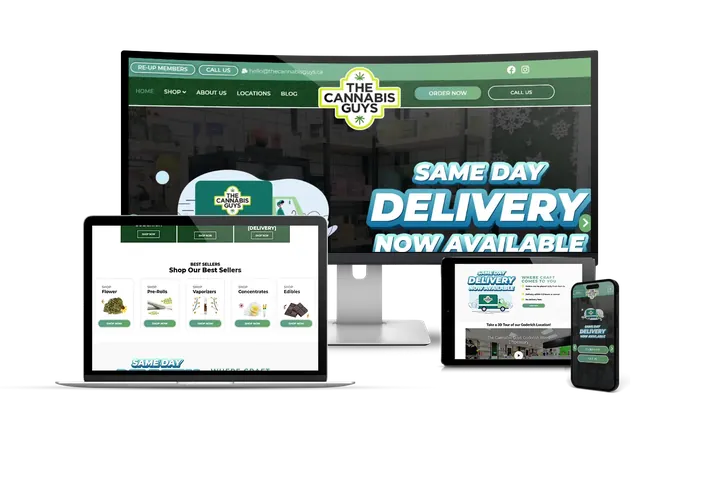
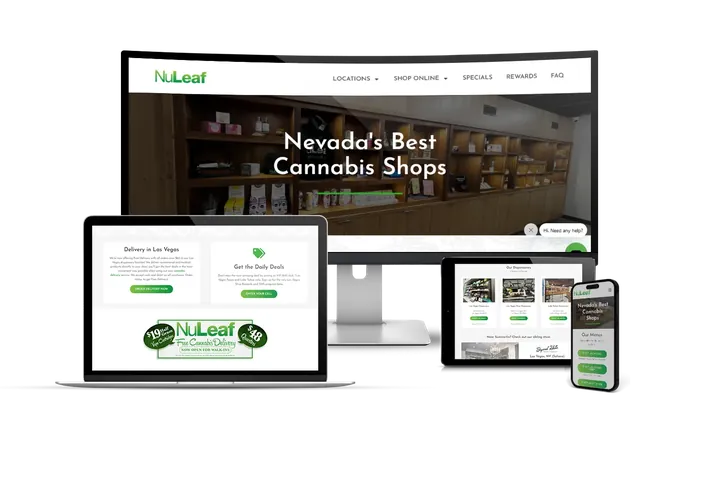
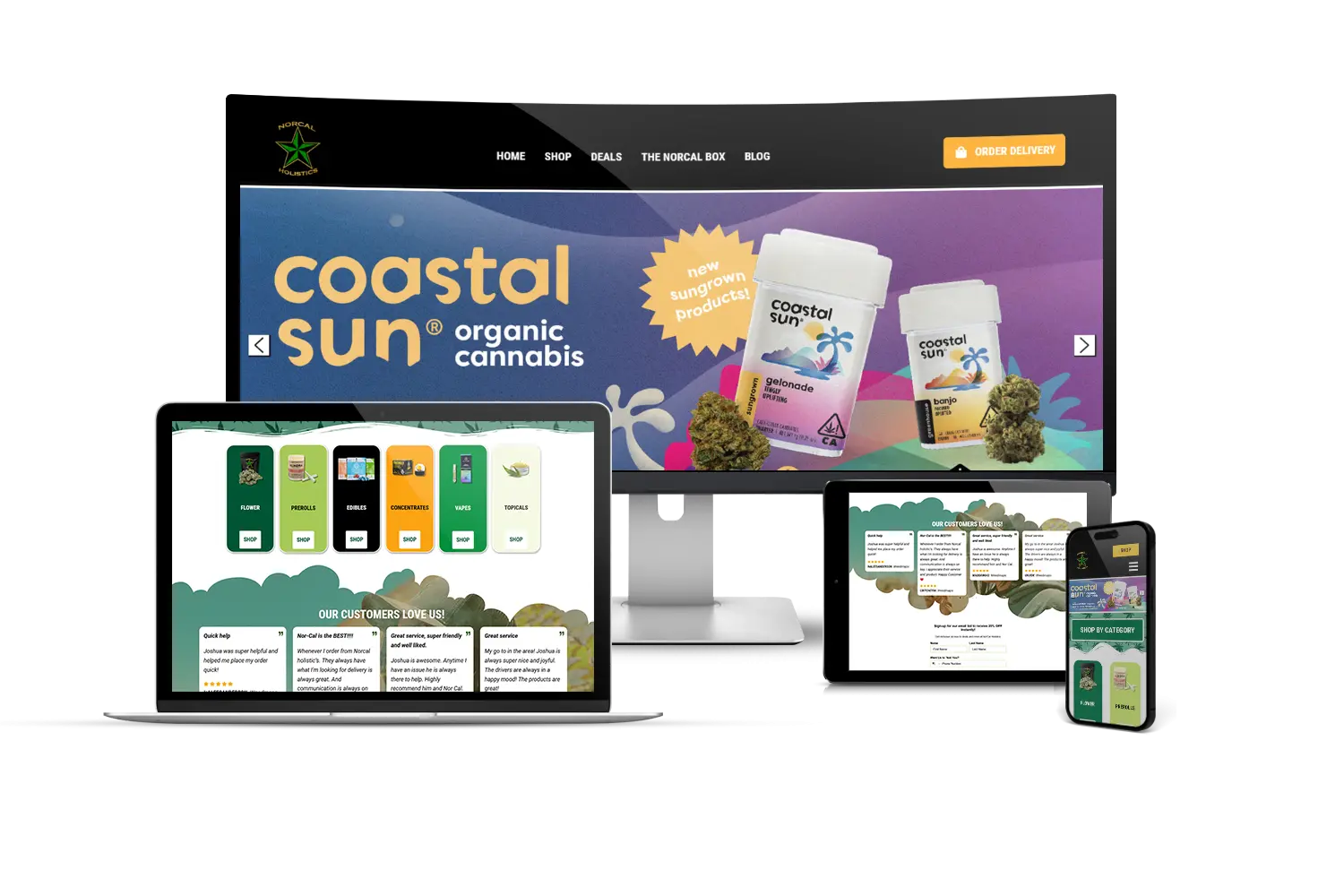
Menu-connected sites built to be updated by staff.
Services
With 485 licensed doors open and a buyer pool that does not grow, the store found first and remembered longest takes the share. These twelve do both jobs for yours: three to rank it, four to build it, three to bring its shopper back, two to run the numbers, all on one contract, and the plans below show which modules each carries.
Rank
Build
Menu-connected sites on SGEN, updated by staff.
READ MOREMenu, POS, loyalty and analytics talking to each other.
READ MORETurning the traffic you already pay for into orders.
READ MOREIdentity, packaging and creative sized for every placement.
READ MORERetain
Performance benchmarks
Day 0
SoLV Weed Dispensary0.00
Direction Requests291
1 Month
SoLV Increase- Weed Dispensary100.00
Direction Requests Increase+100%
Day 0
SoLV Weed0.00
Direction Requests709
12 Month
SoLV Increase- Weed59.62
Direction Requests Increase+49.08%
Day 0
SoLV Weed Dispensary0.00
Direction Requests181
3 Month
SoLV Increase- Weed Dispensary93.37%
Direction Requests Increase+32.51%
Day 0
SoLV Weed Dispensary0.00
Website Visits291
1 Month
SoLV Increase- Weed Dispensary99.17
Website Visits Increase+100%
The plans
Both plans list every module they fold in, in full. Pricing is scoped to your locations — talk to a rep to get yours.
Most Popular!
Guaranteed results
Modules included
Full Suite
Guaranteed Results + Boost your retention
Modules included
Single-location dispensaries · multi-location dispensaries and MSOs · delivery dispensaries.
Nobody in Washington is making new cannabis buyers, so the only sale you win this year is one a competitor loses. Here is the size of that fight in the state's own figures, and our move on each.
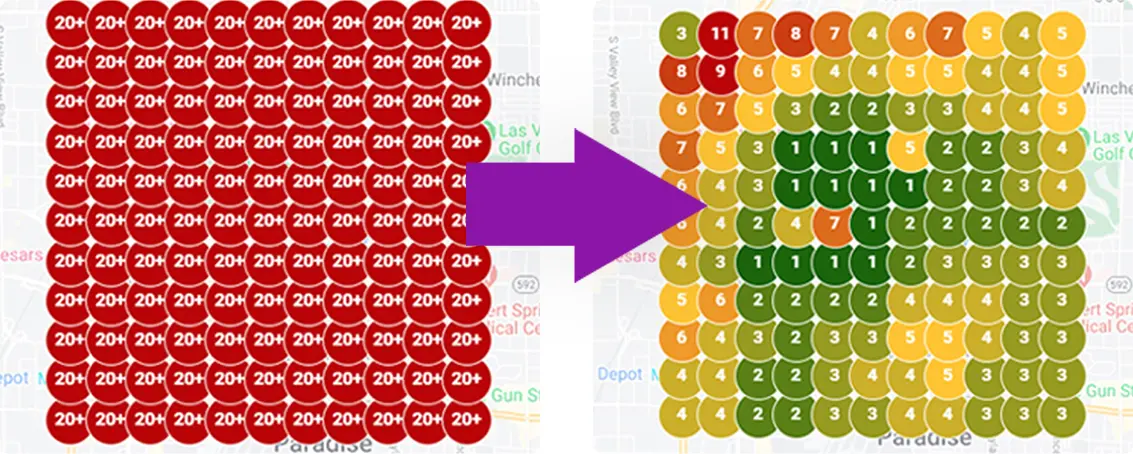
Above, four clients’ day zero against the month, in Share of Local Voice: the share of the local pack a store holds for "Dispensary Near Me" across its trade area.
Store counts are the Washington State Liquor and Cannabis Board's published cannabis retailer record, read on 9 September 2026, which held 485 retailer records that day, 283 of them carrying a medical cannabis endorsement. Sales and excise figures are the same Board's FY25 file covering 1 July 2024 to 30 June 2025; population is the US Census Bureau's Vintage 2024 estimate. No county store count appears here, because that retailer record publishes a street address and a city, never a county.
485 open doors, one counter that does not grow.
Washington's 485 licensed retailers rang up $1,188,173,194 in the year to June 2025, with an excise line of $439,783,952 beside it. Nobody adds a buyer to that counter by advertising harder, so every dollar you gain is one another till lost, and it changes hands the second a shopper searches and taps one of the three names the map puts first. Putting your pin in that three, for an agreed keyword set and radius, is what we guarantee.
More than half your rivals can serve a patient too.
283 of the state's retailer records carry a medical cannabis endorsement, so more than half the doors here answer a patient's search as well as a shopper's, and the endorsement buys you nothing on its own. What separates them is which one the map hands the tap to, won on a complete Google Business Profile, pages built around what your buyers actually type, and citations that agree with each other. Those are the ranking half of what we run for you, and where we start.
One county takes close to a quarter of it.
King County's stores took $284,065,100 of that total on their own, and inside it the map divides again, street by street. Your local jurisdiction, not the state, decides whether a rival may open near you, and a Seattle shopper never sees a Spokane pin. So what we sell you is scoped to the trade area you draw from: your keyword set, your rank grid and your monthly report, with the guarantee written to that grid, not the state line.
Most dispensaries rent their marketing from four vendors and hope the pieces talk to each other. They rarely do.
Washington's 485 open doors are dividing a counter that took $1,188,173,194 in the year to June 2025, and four counties — King, Snohomish, Pierce and Spokane — took roughly three dollars in every five of it, so the fight for your share is settled a few streets wide, and renting four vendors to fight it is the expensive way.
You know the rules you sell under better than any agency does, so this page does not restate them. If you want the references, both are in the library: dispensary advertising rules by state and cannabis marketing compliance.
Your stack is rented from four vendors.
A marketplace listing, a menu vendor, a loyalty or SMS tool and a generic retainer, each with its own login. Fix: one platform (SGEN) and one agency, with the site, the menu and the campaigns in one place.
Local SEO is an upsell tier elsewhere.
The work that puts you in the local pack for "Dispensary Near Me" is often gated behind the top plan. Fix: ranking work is included from the first dollar. Localized on-page SEO, 100+ off-page profiles and Google Business Profile management are in both plans.
Menu traffic leaks to marketplaces.
A shopper who finds your store on a third-party listing is that listing’s customer. Fix: menu-connected SGEN sites keep the order on your domain, with staff updating the menu themselves.
Four invoices, four account managers.
Nobody owns the result. Fix: one point of contact, one monthly report showing what ran, what it cost and what it returned.
Web design and development are included — no separate build fee.
Local SEO, menu-connected websites, email, SMS and loyalty under one contract.
New Frontier Data (2026-06-21) put one operator’s cost per new customer at about $23. So we manage the channel that costs the least per visit: the local pack.
Our currency is Share of Local Voice (SoLV) for "Dispensary Near Me" — the share of local-pack visibility your store holds for that search across its trade area, reported with its window and case page.
The twelve services above are identical in every market we work; what gets written per store is the scope, and here that is never a state-shaped thing. A Seattle door and a Bellingham door share a license type and nothing else that matters to you, so your keyword set, your radius, your rank grid and your monthly report are drawn to the streets your shoppers come from, and the top-three guarantee is written to that same scope.
The state's published retailer record is a list of street addresses, so it carries no delivery figure to scope a program against. If any part of your trade reaches the customer away from your counter, bring it to the demo call and the service-area grid is drawn to that, not to a state figure.
If you run one store.
Whether you are the only licensed door in your town or one of dozens inside a city line changes what your money should buy, and no statewide plan can tell those apart: your license comes from the state, but the map your shopper sees is drawn around her and stops well short of the state line. We scope the work to the map your store actually sits on: its own keyword set, its own Google Business Profile, its own rank grid across the radius your shoppers travel, and Share of Local Voice for "Dispensary Near Me" reported point by point every month, so what you see is a position you gained rather than a sales line you cannot read. See marketing for the single-location dispensary.
If you run several.
Your Seattle store and your Spokane store are never in the same local pack, because the pack is drawn around the person searching and not around the company on the sign: 21 doors compete inside Spokane and 59 inside Seattle, and those are separate fights. The work is built to that shape for you, one SGEN site with a store selector, a page and a Google Business Profile per address, matching citations for each, and one report carrying a row per store, so the location holding its share and the one quietly losing it never average into a single number. Your guarantee is written per location, to each store's own keyword set and radius. See marketing for multi-location dispensaries and MSOs.
Concentration like that changes what your budget is buying, and these six guides answer it, each hung on one Washington figure and each landing on what it costs you and what we do next. Where the guarantee comes up it means one thing throughout: top three in the local pack, on a keyword set and radius written into the agreement. Each guide is linked if you want our method before the call.
Fifty-nine doors in one city, three slots on the map
Seattle's city line holds 59 licensed stores and the local pack still shows three. The other 58 are competing for the same tap you are, and what separates them is not who spends most: it is whose profile is complete, categorised properly, posting, answering questions and carrying photographs that match the menu a shopper is about to open. Most of that is unglamorous and most stores half-finish it. We finish it for you, hold the position with the on-page and citation work behind it, and report the pack point by point each month so you can see the pins you took. See the guide: Google Business Profile for dispensaries.
The outdoor rules are a buying spec, not a warning
Washington caps what your own building may say, at four signs of 1,600 square inches apiece, allows a billboard that may not show the plant or the product, and keeps you off vehicles, transit shelters, stations and airports altogether under WAC 314-55-155. Read as a rule that is a nuisance; read as a buying spec it tells you where not to put a dollar before you spend one finding out. It also tells you where the money goes instead: the map, your own site and the list you own, none of which is capped, and all of which we run for you on one contract. See the guide: dispensary advertising rules by state.
Where the money already is, and what your site owes it
King County's stores took $284,065,100 in the year to June 2025, Snohomish $149,439,947 and Pierce $141,523,284: three counties, close to half the state's counter. If you trade in one of them the buyer is already on your street, and the only question is whether your site answers her faster than the door up the road, with the menu live, the stock true, the order start on the first screen and the whole thing quick on a phone. A site that makes her wait sends her back to the map, where a rival is waiting. That build is ours to do, with no separate build fee inside our plans. See the guide: the dispensary website design guide.
A pool of 7,958,180 that nobody is adding to
Washington held 7,958,180 residents at the last Census estimate, some share of them buy legal cannabis, and that share does not grow because you advertise harder. Which makes the people who have already bought from you the only audience in this state you are not renting from somebody else. Email reaches buyers who chose you once already, nobody outbids you for their inbox, and it is the cheapest way to turn one visit into a habit. We build the list, write the sends, and put what they return in the same monthly report as your rankings. See the guide: the dispensary email marketing playbook.
283 rivals who can answer a patient, and one who is remembered
283 of the state's retailer records carry a medical cannabis endorsement, so more than half the doors can serve the customer who buys most often and most predictably. That customer is not won by shouting; she is won by being remembered. A points or tier structure wired into your till, with the email and SMS that keep it warm, is the one asset a rival cannot rank away from you, because it is a relationship rather than a position on a map. We wire it into your POS and run the email and SMS behind it, so her second visit stops being a coin toss. See the guide: the dispensary loyalty program guide.
The excise line is fixed. Four vendor invoices need not be
Washington's excise line took $439,783,952 out of the state's counter in its last full financial year, before a single vendor invoice was paid. What usually comes next is four of them, a marketplace listing, a menu tool, a texting platform and an agency retainer, none of which talk to each other and all of which bill you whether the month was good or bad. That is the expensive way to buy this fight. What each rented piece actually costs, from dated third-party sources, is set out in the guide; both of our plans put the site, the ranking work and the reporting on one contract. See the guide: what dispensary marketing costs.

New to hiring an agency? Read the dispensary marketing guide or browse all dispensary marketing guides.
Do you guarantee rankings?
A written top-3 local ranking guarantee — Dispenza’s own offer; the keywords, radius and time window are set in your agreement (see terms). Terms apply. Ask for the guarantee terms on your demo call before you sign anything. The guarantee covers the local keyword set agreed for your trade area, over a defined window.
Which platform are the sites built on?
Built on SGEN — the platform every one of Dispenza’s 500+ dispensary sites runs on. SGEN is Dispenza’s in-house website platform, so the team that hosts your site is the team running your campaigns. Menu-connected sites are built to be updated by staff.
What does it cost?
Pricing is scoped to your locations and both plans above list every module in full, with the site build included and no separate build fee. A quote for your store count takes one demo call. See how pricing works.
Seattle already has agencies that say they do cannabis. Why Dispenza?
Because the offer is different, not the vertical. Every site we build runs on SGEN, which we own, so the team hosting your site is the team ranking it, on one contract instead of four invoices that never talk to each other. And the ranking work carries a written top-three local ranking guarantee for an agreed keyword set, radius and window, which you are welcome to ask any other agency to put in writing before you choose. Terms apply.
My license is statewide. Does that make Washington one market?
No, and a statewide plan is the tell. Your license comes from the state, but your local authority settles whether a rival may open near you, and the map ignores both: a shopper in Tacoma, where 20 doors compete, never sees one of Bellingham's 17, because the local pack is drawn around the person searching. Each of your stores gets its own keyword set, its own profile and its own rank grid, scoped to the streets it actually trades on. The reporting rolls up; the work does not.
How many stores am I actually up against?
Fewer than the headline. The state's retailer record held 485 licensed stores when we read it, but only a handful sit inside your own radius, and those are the only ones a shopper searching near you will ever see. We count them on the demo call by drawing the rank grid over your trade area, and the guarantee is scoped to that grid rather than to the state.
The whole state did just under $1.19bn. Is there room in that for me?
There is no new room; there is somebody else's share. King, Snohomish, Pierce and Spokane took roughly three dollars in every five of that counter, so if you trade in one of them your buyers are already on the street and the only open question is which door they tap. Hold or lift your rank while the field stands still and you take that share off the store that did not, and that is what we report to you, point by point, every month.
What would you measure in the first ninety days?
Share of Local Voice for "Dispensary Near Me", read across a grid of points inside your radius and reported point by point rather than as one rank, with calls, direction requests and order starts from your site beside it. Those four move before revenue does, which is why we report them first. The keyword set, the radius and the window are written into the agreement, and on that agreed set the offer is top three in the local pack, guaranteed. Terms apply, and we go through them on the demo call before you sign.
Book straight into the calendar. Bring your store count and your address; you leave the call with a quote scoped to your locations and the guarantee terms to read before you sign.
More markets
Every market page is written to its own store count and its own map, and the guarantee is written to yours.
Where the doors are, by licensed cannabis retailers (LCB privilege "Cannabis Retailer" / "Social Equity Cannabis Retailer", privilege status ACTIVE (ISSUED)): Seattle 53, Spokane 22, Tacoma 19, Vancouver 18, Bellingham 17, Everett 13, Lynnwood 10, Mount Vernon 9, Longview 8, Olympia 8, Bremerton 7, Port Angeles 7, Port Orchard 6, Puyallup 6, Renton 6, Bellevue 5, Lacey 5, Pullman 5, Shelton 5, Snohomish 5, Wenatchee 5, Yakima 5, Aberdeen 4, Arlington 4 and 126 more. Every number here is counted from Washington State Liquor and Cannabis Board (LCB) - Cannabis Applicants / Retailers list, Frequently Requested Lists (file CannabisApplicants09012026_0.xlsx, dated 9-1-2026), read 2026-09-10. If your city is on that list, the fight for its map is already running.
Long-term relationships built on trust, transparency, & results
We get it, the digital marketing and cannabis industries don't always have the most dependable people to rely on. That's why at Dispenza, we back up what we say with results.