This dispensary SEO guide covers the three surfaces a licensed store ranks on, in the order that moves them: the local pack, the menu pages on your own domain, and the content and citations underneath. Updated 2026-09-07. Reading time about 11 minutes.
Direct answer. To rank a dispensary in 2026 you need a complete, actively managed Google Business Profile, a menu-connected website where product and category pages are indexable on your own domain, consistent citations across 100+ profiles, and local content per store. Measure the result as Share of Local Voice for "Dispensary Near Me", not as a single keyword position.
Written by
James Compton
Chief Executive Officer
1. What dispensary SEO is, and the three surfaces it covers
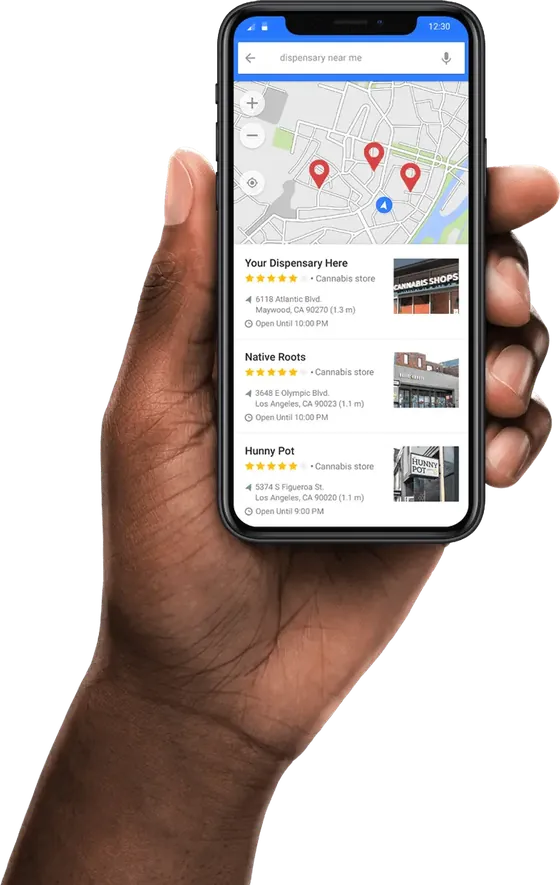
Direct answer. Dispensary SEO is the work of making a licensed store appear in the local pack, in organic results and on menu-page searches for its own area. It is three surfaces, not one: the map pack that sends calls and directions, the organic list underneath, and the product and category pages people search for by strain, brand or deal.
The local pack is a Google Business Profile ranking, not a website ranking. The organic list is a website ranking. The menu surface is a page-level ranking that most dispensaries hand to a vendor iframe and never win.
Ranking well on one surface does not carry to the others. A store can hold position one in the pack and have no organic page for "<city> dispensary deals". The rest of this guide takes the surfaces in order of return.
2. How to do dispensary SEO in 2026: the order of operations
Direct answer. How to do dispensary SEO in 2026: fix the Google Business Profile first, then make the menu indexable on your own domain, then build citations, then add local content, then earn links. That order follows the 80/20 rule in SEO: roughly 80 percent of local results come from the profile, the menu pages and citation consistency.
Most dispensary SEO plans start at the wrong end. They buy blog posts before the profile has the right primary category, or they build links to a homepage while the menu lives on a vendor's domain.
The 20 percent that does most of the work:
1. Google Business Profile. Category, services, hours, photos, Q&A, reviews, and the duplicate listings that split your signal.
2. Menu pages on your domain. Product, category and deal pages with their own URLs, titles and schema.
3. Citations. Name, address and phone identical across 100+ profiles.
The remaining 80 percent of effort, city pages, education content and links, compounds on top of those three. Done first, it compounds on nothing.
3. Google Business Profile: the ranking surface that sends the calls
Direct answer. The Google Business Profile decides whether a dispensary appears in the local pack. Set the primary category correctly, list services the way people search, keep hours and holiday hours current, post weekly, seed the Q&A, refresh photos, answer every review, and report duplicate or fake listings until they drop.
Proximity is fixed. Prominence and relevance are the two levers you can move, and both live in the profile.
Categories. One primary, reviewed quarterly, plus the secondaries that match how customers search.
Services and products. Product highlights that mirror the live menu so the profile and the site agree.
Posts. Weekly deals, drops and hours changes. A profile with no post in 60 days reads as abandoned.
Q&A. Seed the questions people ask before visiting: parking, ID rules, medical vs adult-use lines, delivery radius.
Reviews. Reply to every one in your voice within the agreed window. Never print the count on your site until it is reconciled with the live profile.
Spam. Duplicate and fake competitor listings reported and tracked.
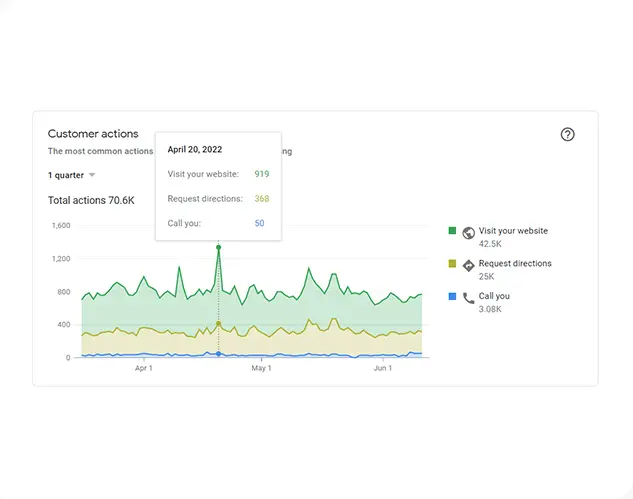
What a managed profile produces, on a named case page: +241% direction requests — NuLeaf case page, from its Customer Actions KPI block. Read the NuLeaf dispensary SEO case study.
Direct answer. On-page SEO for a dispensary starts with the menu. Menu-connected sites keep product, category and deal pages on your own domain with their own URLs, titles, headings, schema and internal links. An iframed menu gives those rankings to the vendor. City and service-area pages then give the local pack a landing page per store.
The test is simple. Open a product on your site and read the address bar. If the URL is your domain, the page can rank for you. If it is the vendor's domain, or the page is a shell around an embed, it cannot.
On a menu-connected site built on SGEN, the checklist per page is:
One H1 that names the product or category and the city.
A title tag under 60 characters with the phrase near the front.
Product schema with price, availability and brand where the state allows the display.
Internal links from the category page to the deal page to the city page and back.
Images with descriptive alt text; no vendor watermark.
"Dispensary Near Me" is the phrase that matters most in the pack, and the menu is what turns the pack click into an order. Read how the menu connection works on the dispensary menu integration page and the dispensary website design guide for the site checklist.
5. Content that ranks for a dispensary
Direct answer. Dispensary content that ranks is local, specific and compliance-safe: a page per city or service area, strain and product education written for your state's rules, deal pages that change with the menu, and answers to the questions your budtenders hear every day. Volume does not rank; relevance to a place and a licence does.
Three content types return more than the rest:
1. City and service-area pages. One per store or delivery zone, with hours, directions, parking, the local menu and the profile link.
2. Education pages. Strain types, consumption formats, first-visit guides, medical vs adult-use rules for your state. No health claims.
3. Deal and drop pages. Indexable pages for recurring promotions, where your state permits discount advertising.
Every page carries the licence number where the state requires it and avoids appeals to minors. The cannabis SEO strategy guide covers content planning for brands and multi-state operators in more depth.
6. Citations and links
Direct answer. Citations are the mentions of your name, address and phone across directories and data aggregators. For a dispensary they need to be identical everywhere, including the licence-holder name. Links come after citations: local press, sponsorships where lawful, supplier pages and the footer attribution on sites your partners run.
The live deliverable behind this chapter is 100+ Off-Page SEO (Profiles). The work is unglamorous: claim, correct and monitor each profile so every source agrees on who and where you are.
Links for a dispensary are harder than for most local businesses because many publishers will not link to a cannabis retailer. The sources that do:
Local news coverage of openings, hires and community work.
Event and sponsorship pages where your state permits sponsorship.
Brand and supplier "where to buy" pages.
Footer or "powered by" credits on partner and vendor sites, where the partner agrees to a followed link. Treat these as a minor lever: a handful of local, relevant links outweighs a credit that repeats on every page of one site.
7. Measuring dispensary SEO: Share of Local Voice, calls, directions, orders
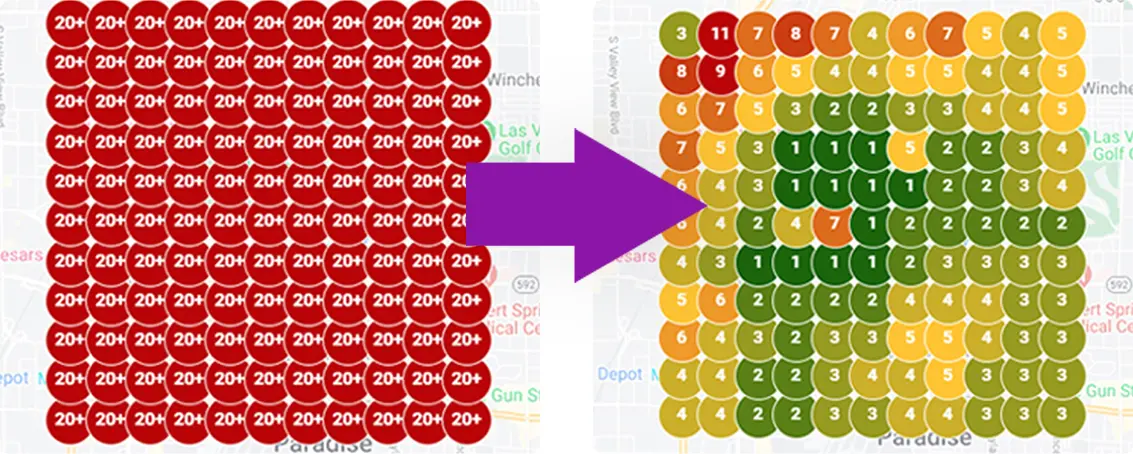
Direct answer. Measure dispensary SEO as Share of Local Voice (SoLV) for "Dispensary Near Me" across a grid around each store, plus calls, direction requests and orders from the profile and the site. A single keyword position hides the truth; a grid shows where you win and where you do not.
SoLV is the share of local-pack appearances your store holds across the grid points in your radius for the target phrase. Reported monthly, per location, it shows movement long before revenue does.
The report should carry four lines per store: SoLV with its window, calls from the profile, direction requests, and orders or form submissions from the site. The deliverable on the plan plate is Monthly and Quarterly Reporting.
A real value, with its window: +45.59% increase in SoLV for "Dispensary Near Me" over 6 months — NuLeaf NV case page.
+45.59%6moINCREASE IN SOLV FOR "DISPENSARY NEAR ME" — NULEAF NV
+241%DIRECTION REQUESTS — NULEAF NV
The reason to measure this carefully: New Frontier Data (2026-06-21) put one operator's cost per new customer at about $23. A local-pack gain that shows up as direction requests is among the cheapest customers a dispensary acquires.
The dispensary SEO checklist
Print this dispensary SEO checklist and run it this week.
Google Business Profile
Primary category correct; secondaries reviewed this quarter
Services and products listed and matching the menu
Hours and holiday hours current
At least one post in the last 7 days
Q&A seeded with 10+ questions and answers
Photos refreshed in the last 30 days
Every review answered
Duplicate and fake listings reported and tracked
Menu and on-page
Product and category pages on your own domain
One H1 per page naming product or category plus city
Title tags under 60 characters, phrase near the front
Product schema where the state allows price display
Internal links category → deal → city and back
Alt text on every image
Mobile LCP measured with a named tool and dated
Citations
NAP identical on 100+ profiles, including the licence-holder name
Data aggregators claimed and corrected
Old addresses and phone numbers retired everywhere
Content
One city or service-area page per store or zone
Education pages written to your state's rules, no health claims
Deal pages indexable where discount advertising is permitted
Licence number displayed where required
Links
Local press list built and pitched
Supplier and brand "where to buy" links requested
Sponsorship pages where lawful
Measurement
SoLV grid set per store for "Dispensary Near Me"
Calls, directions and orders tracked per location
Monthly report with windows on every number
8. Dispensary SEO vs CBD and hemp SEO
Direct answer. What is CBD SEO? It is search optimisation for hemp-derived CBD brands that ship nationally, so it competes on national product and informational terms. Dispensary SEO is local: a licensed store wins the pack and the menu in its own radius. The tactics overlap on technical basics and diverge on everything that matters.
A CBD brand fights for "best CBD gummies" against every national retailer. A dispensary fights for "dispensary near me" against the six stores inside its radius. The dispensary fight is smaller and more winnable, and it is decided by the profile and the menu, not by domain authority.
If you run both a licensed store and a hemp line, keep them on separate pages with separate profiles. Mixing them muddies the category signal on both. The cannabis SEO strategy guide covers the brand side.
What to ask any agency to prove
Before you hire anyone for dispensary SEO, ask for three things. A dated local-pack capture for a store they manage. A SoLV figure with its window and grid. And KPIs tied to a named case page you can open. If an agency offers a ranking guarantee, ask for the written terms. Dispenza's is a written top-3 local ranking guarantee — Dispenza's own offer; the keywords, radius and time window are set in your agreement (see terms). Terms apply.
Frequently asked questions
What is the 80/20 rule in SEO?
The 80/20 rule in SEO holds that roughly 80 percent of results come from 20 percent of the work. For a dispensary, that 20 percent is the Google Business Profile, indexable menu pages on your own domain, and consistent citations. Do those three first. City pages, education content and links compound on top of them, and return little if the foundation is missing.
What is CBD SEO?
CBD SEO is search optimisation for hemp-derived CBD products sold online across state lines. It competes on national product and informational terms against every other retailer. Dispensary SEO is local by nature: a licensed store ranks in the local pack and on menu pages inside its own radius. The two share technical basics and differ in strategy, measurement and the surfaces that decide the result.
What are the top 5 SEO strategies?
For a dispensary, in order. Manage the Google Business Profile weekly. Keep the menu indexable on your own domain. Build and hold consistent citations across 100+ profiles. Publish one local page per store or service area with compliance-safe education content. Measure Share of Local Voice per store monthly, so every change is tied to a number with a window.
How to grow your SEO?
Grow dispensary SEO by widening the surface, not by adding volume. Add a city or service-area page for each place you serve. Add product and category pages as the menu grows. Add posts, photos and Q&A to the profile each week. Earn the local links that publishers will give a licensed retailer. Report SoLV, calls, directions and orders monthly, and change what the report says is not moving.
Use this dispensary SEO guide yourself, or book a demo
James Compton is Chief Executive Officer of Dispenza, the cannabis marketing agency for licensed dispensaries, and is responsible for how the agency approaches dispensary SEO: local search first, menu pages indexed on your own domain, and Share of Local Voice as the measure. To go through what that means for your own stores, start a conversation with the team.
Search
(function(){
function run(){ if (window.lucide && typeof window.lucide.createIcons === 'function') window.lucide.createIcons(); }
if (document.readyState !== 'loading') run();
else document.addEventListener('DOMContentLoaded', run);
setTimeout(run, 100);
})();