Performance marketing
Organic and local demand for a licensed dispensary.
- Localized On-Page SEO
- 100+ Off-Page SEO (Profiles)
- Google Business Profile Management
- Monthly and Quarterly Reporting
190 dual-use dispensaries. Three map positions.
A dispensary-only agency, working all of Ohio. One team, one contract, every surface a shopper touches.
The numbers
1.2 BLN
SALES INFLUENCED
2.1 BLN
WEBSITE VISITS
3.8 BLN
GOOGLE IMPRESSIONS
500+
LOCATION HELPED
Two of twelve
Organic and local demand for a licensed dispensary.
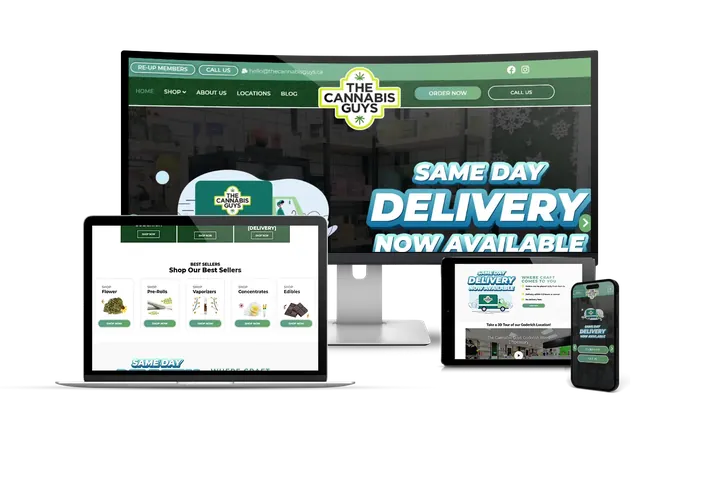
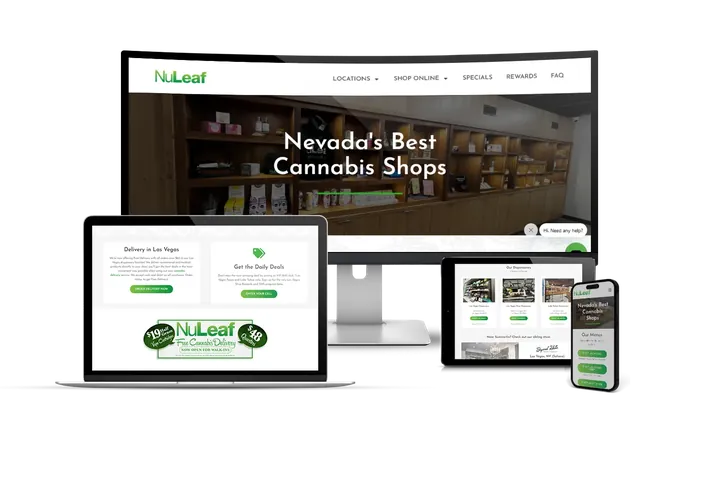
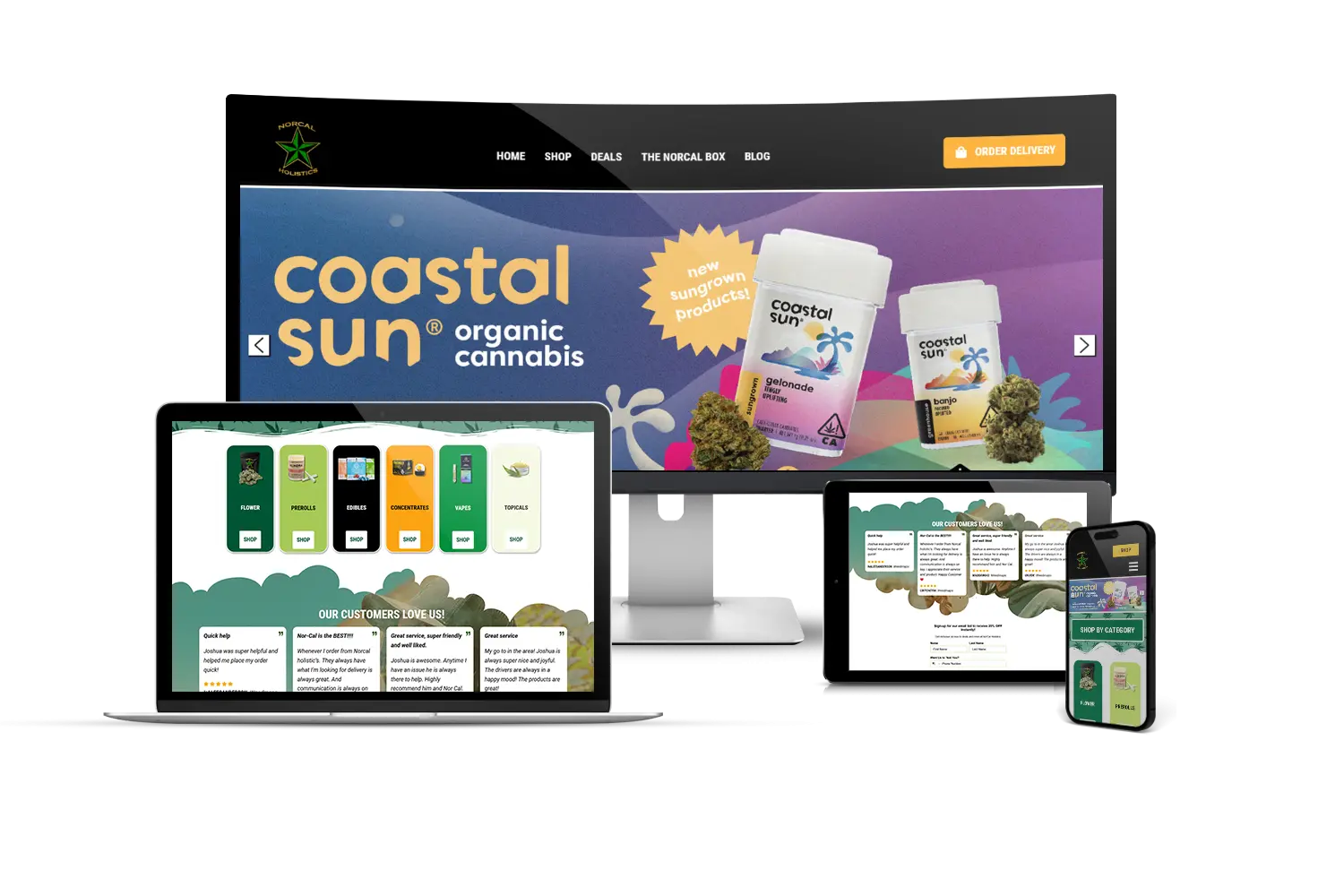
Menu-connected sites built to be updated by staff.
Services
With billboards, radio and TV closed to every Ohio dispensary, the shopper goes to whoever she finds first and remembers longest, and these twelve do both jobs for your store: three to rank it, four to build it, three to bring her back, two to run the numbers. One agency and one contract; the plans below show which modules each carries.
Rank
Build
Menu-connected sites on SGEN, updated by staff.
READ MOREMenu, POS, loyalty and analytics talking to each other.
READ MORETurning the traffic you already pay for into orders.
READ MOREIdentity, packaging and creative sized for every placement.
READ MORERetain
Performance benchmarks
Day 0
SoLV Weed Dispensary0.00
Direction Requests291
1 Month
SoLV Increase- Weed Dispensary100.00
Direction Requests Increase+100%
Day 0
SoLV Weed0.00
Direction Requests709
12 Month
SoLV Increase- Weed59.62
Direction Requests Increase+49.08%
Day 0
SoLV Weed Dispensary0.00
Direction Requests181
3 Month
SoLV Increase- Weed Dispensary93.37%
Direction Requests Increase+32.51%
Day 0
SoLV Weed Dispensary0.00
Website Visits291
1 Month
SoLV Increase- Weed Dispensary99.17
Website Visits Increase+100%
The plans
Both plans list every module they fold in, in full. Pricing is scoped to your locations — talk to a rep to get yours.
Most Popular!
Guaranteed results
Modules included
Full Suite
Guaranteed Results + Boost your retention
Modules included
Single-location dispensaries · multi-location dispensaries and MSOs · delivery dispensaries.
Nobody in Ohio is making new cannabis buyers. Adult-use opened the doors to shoppers who already existed, so a sale walking into a rival's store is a sale that left your till. Here is the size of that fight, and our move on each figure.
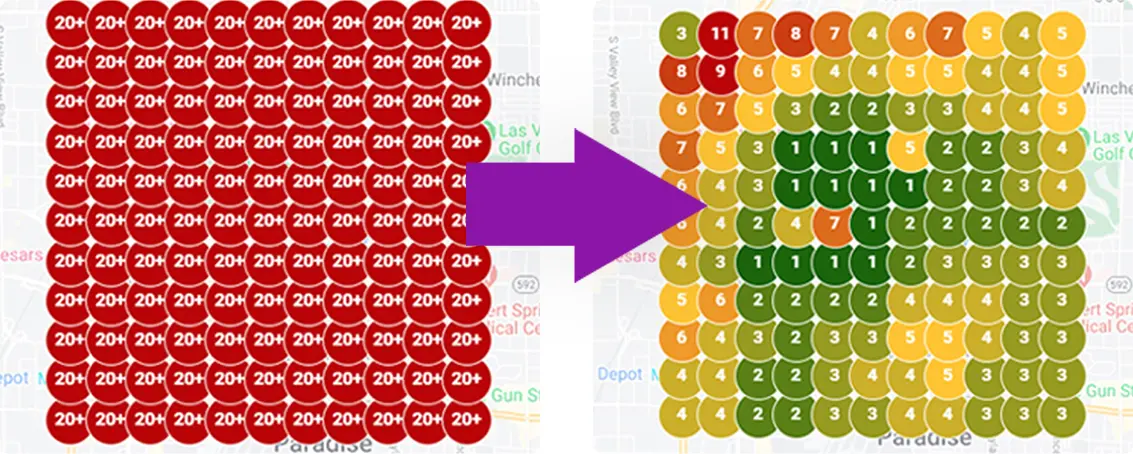
Above, four clients’ day zero against the month, in Share of Local Voice: the share of the local pack a store holds for "Dispensary Near Me" across its trade area.
Ohio's sales total, its dispensary count and the 400-license cap SB 56 sets are the figures on file for the Division of Cannabis Control, Ohio Department of Commerce's program, read on 9 September 2026; the Division's own statistics page was unreachable that day, so the count is the approximate July 2026 figure then in circulation, and the sales total the figure then published, rather than a Division release read line by line. The advertising rules are the Division's own advertising guidance of January 2026 and OAC 1301:18-4-22. Moratorium counts and the share of population under them are the Ohio State University Moritz College of Law Drug Enforcement and Policy Center tracker as of 28 August 2026. No per-city dispensary count and no named list of banning or unbanning towns appears here, because neither the Division's dispensary list nor the tracker's town-level table was read for this page.
About 190 doors. One billion dollars. No new buyers.
Ohio's dispensaries took roughly $1.06 billion in calendar 2025, and by July 2026 about 190 dual-use dispensaries were trading, against the 98 dual-use certificates of operation issued when adult-use sales opened in August 2024. The buyers did not double with the doors; they split. So your next sale comes off a rival's till when a shopper taps one of the three the map shows first, and putting your pin in that three, for an agreed keyword set and radius, is what we guarantee.
198 towns say no. Their shoppers keep buying.
On 28 August 2026, 198 Ohio municipalities and townships ran an active adult-use moratorium, covering roughly 19% of the population. A shopper there does not stop buying; she searches, and her money crosses the town line to whichever store the map shows first. Trade near a line like that and your pin sells to two towns. Whether yours is one of the three she sees is what we work: profile, pages and citations, on a rank grid drawn to your trade area.
No billboards. No broadcast. One map.
Every Ohio cannabis advertisement goes to the Division for review before it runs, and billboards, radio, TV and internet programming are closed. Read as a buyer, that is good news: the bigger budget has nowhere left to spend itself against you. The fight is on the map, on your own site and in the list you own. We run those three on one contract, report your Share of Local Voice point by point monthly, and write the guarantee to that grid and your agreed keyword set.
Most dispensaries rent their marketing from four vendors and hope the pieces talk to each other. They rarely do.
Ohio's roughly 190 dispensaries took about $1.06 billion across the counter in 2025 with billboards, radio, TV and internet programming all closed to them, so the whole fight for a shopper happens on the map, on your own site and in the list you own, and renting those three surfaces from four vendors who do not talk to each other is the most expensive way there is to fight it.
You know the rules you sell under better than any agency does, so this page does not restate them. If you want the references, both are in the library: dispensary advertising rules by state and cannabis marketing compliance.
Your stack is rented from four vendors.
A marketplace listing, a menu vendor, a loyalty or SMS tool and a generic retainer, each with its own login. Fix: one platform (SGEN) and one agency, with the site, the menu and the campaigns in one place.
Local SEO is an upsell tier elsewhere.
The work that puts you in the local pack for "Dispensary Near Me" is often gated behind the top plan. Fix: ranking work is included from the first dollar. Localized on-page SEO, 100+ off-page profiles and Google Business Profile management are in both plans.
Menu traffic leaks to marketplaces.
A shopper who finds your store on a third-party listing is that listing’s customer. Fix: menu-connected SGEN sites keep the order on your domain, with staff updating the menu themselves.
Four invoices, four account managers.
Nobody owns the result. Fix: one point of contact, one monthly report showing what ran, what it cost and what it returned.
Web design and development are included — no separate build fee.
Local SEO, menu-connected websites, email, SMS and loyalty under one contract.
New Frontier Data (2026-06-21) put one operator’s cost per new customer at about $23. So we manage the channel that costs the least per visit: the local pack.
Our currency is Share of Local Voice (SoLV) for "Dispensary Near Me" — the share of local-pack visibility your store holds for that search across its trade area, reported with its window and case page.
The twelve services above do not change between markets; what changes for you is the scope, and in Ohio the scope is cut by a town line, not the state line. Your keyword set, your radius, your pin count and the shape of the report we write you are drawn to the trade area your shoppers actually come from, and your top-three guarantee is written to that same scope.
If you deliver as well as trade from a storefront, bring that side of the business to the demo call too; the service-area grid is scoped there, to the routes you actually run, rather than to any statewide figure.
If you run one dispensary.
Ohio's map is cut by town lines, not the state line. Ohio has 924 incorporated municipalities and 1,307 townships, and a moratorium in any one of them stops a store, not a shopper, so the ban that matters to you is rarely the one on your own street — it is the one two towns over, sending its shoppers to whichever store the map ranks first. Your shopper never sees the line she crosses. So we draw your rank grid across the trade area you actually draw from rather than the municipality on your certificate: your own keyword set, your own Google Business Profile, your own citation set, with Share of Local Voice for "Dispensary Near Me" reported point by point every month. See marketing for the single-location dispensary.
If you run several.
Ohio went from the 98 dual-use certificates of operation issued on the first day of adult-use sales to about 190 dispensaries trading by July 2026, under a statewide cap of 400 dispensary licenses, so if you run several doors here you are fighting a field that is still filling in, town by town, and your second store's closest rival may not have opened yet. The program mirrors that: one SGEN domain with a store selector, one page and one Google Business Profile per location, one citation set per address, and a roll-up report with a row per store, so a location holding share in one county and one quietly losing it in the next are never averaged into one line. The guarantee is written the same way, per location, per keyword set, per radius, not one number for the group. See marketing for multi-location dispensaries and MSOs.
Six things you are up against in Ohio, what each one costs you, and what we do about it under a written top-three guarantee scoped to your keyword set and radius. Each one hangs a guide's method on one Ohio fact, and links the guide if you want the method before the call.
Read the Ohio ad rules as a buying spec, not a warning
Billboards in any form, radio, TV and internet programming: every one of them is closed to an Ohio dispensary, and whatever is left goes through the Division's eLicense review before it runs. Read that as a buying spec and it saves you money twice: you never pay for a placement that cannot run, and you know in advance where the budget works instead, which is the map, your own site and the list you own, none of which a rival can outspend you on with a billboard budget it is not allowed to spend. We build to the spec, the age gate at 21 and the Division's seal included, and we run those three surfaces for you under one contract. See the guide: dispensary advertising rules by state.
The pin that catches a shopper from a town with no store
Roughly 19% of Ohioans live under an active adult-use moratorium, in jurisdictions averaging about 11,000 people, and every one of them is a shopper who types the search at home and buys wherever the map sends her. She is not your neighbor and she is not on your street, so nothing you put in the window reaches her. The pin that catches her is a Google Business Profile worked every month: the category set right, the hours current, every review answered, the menu linked, and the service area drawn to where she actually lives. That work sits in both plans, and it is how one pin takes a shopper the next town expected to keep. See the guide: Google Business Profile for dispensaries.
Two years in, nobody owns the Ohio map yet
Adult-use sales here are two years old, the field has nearly doubled since the first day and the statewide cap allows 400 licenses in all, so the ranking you are up against is not a decade of entrenched authority but a rival who started months before you did. That is the cheapest moment there will ever be to take a position, and the dearest moment to wait: every month the field fills in, the three pack positions we guarantee for your keyword set and radius get harder to move. Dispensary SEO is the order of operations for taking them, profile first, then the pages your shoppers actually type for, then citations that match, and it is the first thing we start for you. See the guide: the dispensary SEO guide.
Where every pin sends the tap, and where the order stays yours
With broadcast and billboards closed, your site is the only surface in Ohio where your store speaks at length, and the Division's guidance sets its spec: an age gate at 21, 18 for patients, and the Division's seal. On a marketplace you sit in the same listing format as every other dispensary, undercut by whoever is cheapest that week, and the shopper who orders there is that marketplace's customer; you rent her back next month. A menu-connected site on your own domain, updated by your staff, is where the order stays and the returning patient is recognized. The build is included in both of our plans, with no separate build fee, and it is the page every pin of yours sends the tap to. See the guide: the dispensary website design guide.
The patient at your counter is the buyer a rival cannot rank away
Ohio's medical program came first, and most of its dispensaries now hold dual-use certificates, so one counter serves the patient who has bought from you for years and the adult shopper who found you on the map this month. Of roughly $1.06 billion sold in 2025, about $233 million was medical, and that is the steadiest money in the building: a relationship, renewed on a schedule, that no competitor's pin can take by outranking you. It is also the easiest to lose by neglect. A points or tier structure wired into your POS, with the email and SMS that keep it warm, holds both buyers, and that retention layer is the difference between our two plans. See the guide: the dispensary loyalty program guide.
Four invoices, 190 open doors and a cap of 400 licenses
A marketplace listing, a menu tool, a texting platform and an agency retainer each bill you every month whether Ohio holds today's door count or fills the 400 licenses its cap allows, and none of them talks to the others, so the fixed cost of renting your stack climbs as a share of your till every time a new rival opens and splits the buyers again. In a state where the paid channels a bigger budget would buy are closed, that rented stack is the one line you can actually cut. What each piece costs, from dated third-party sources, is in the guide; both of our plans put the site, the ranking work and the reporting on one contract, with the web build included. See the guide: what dispensary marketing costs.

New to hiring an agency? Read the dispensary marketing guide or browse all dispensary marketing guides.
Do you guarantee rankings?
A written top-3 local ranking guarantee — Dispenza’s own offer; the keywords, radius and time window are set in your agreement (see terms). Terms apply. Ask for the guarantee terms on your demo call before you sign anything. The guarantee covers the local keyword set agreed for your trade area, over a defined window.
Which platform are the sites built on?
Built on SGEN — the platform every one of Dispenza’s 500+ dispensary sites runs on. SGEN is Dispenza’s in-house website platform, so the team that hosts your site is the team running your campaigns. Menu-connected sites are built to be updated by staff.
What does it cost?
Pricing is scoped to your locations and both plans above list every module in full, with the site build included and no separate build fee. A quote for your store count takes one demo call. See how pricing works.
Ohio allows no billboards, radio or TV. Where does a dispensary's marketing budget actually go?
On the three surfaces that are open and that a rival cannot outspend you on: the map, your own site and the list you own. Every piece of creative still goes through the Division's eLicense review before it runs, so we build to that spec rather than around it, and the budget that would have gone on a billboard goes on the profile, the pages and the retention layer, reported to you monthly so you can see what each returned.
A lot of my shoppers live in towns with a moratorium. Does that change how you scope the work?
It changes everything about the scope. A town line stops a store opening; it does not stop a shopper searching, so the rank grid is drawn across the trade area you actually draw from, including the towns that say no, and the keyword set and radius are agreed with you for that grid. That scope goes into the agreement, and it is what the top-three guarantee is written to, not the municipality on your certificate.
How many dispensaries are we really up against?
Fewer than the state count. About 190 dual-use dispensaries were trading by July 2026, and the cap allows 400 licenses in all, but a shopper searching in one corner of the state never sees a pin from the other: the local pack is drawn around the person searching, so the fight that matters to you is the handful of doors inside your own radius. We count those on the demo call by drawing the rank grid for your trade area, and the guarantee is scoped to that grid.
We are dual-use. Do you market to patients and adult-use shoppers differently?
Yes, because they reach you differently. The adult shopper is won on the map, by your pin being one of the three she sees; the patient is kept by a relationship, a points or tier structure in your POS with the email and SMS that keep it warm. Both run from one contract and show up in one report, so you can see which half of the counter is growing and which is quietly leaking to a rival.
The field has nearly doubled in two years. Does that make top three harder?
It makes waiting dearer, not the position harder. The pack shows three stores whatever the door count, and a field this young has no decade-old authority to shift, only rivals who started earlier. The keyword set, the radius and the window go into the agreement, and the offer on that agreed set is top three in the local pack, guaranteed. Terms apply, and we walk you through them on the demo call before you sign.
Book straight into the calendar. Bring your store count and your address; you leave the call with a quote scoped to your locations and the guarantee terms to read before you sign.
More markets
Every market page is written to its own store count and its own map, and the guarantee is written to yours.
Where the doors are, by dispensaries with a Certificate of Operation (all dual-use: permitted to sell both medical and non-medical cannabis): Columbus 25, Cincinnati 23, Cleveland 10, Dayton 8, Akron 4, Athens 4, Canton 4, Lorain 4, Monroe 4, Newark 3, Parma 3, Springfield 3, Warren 3, Ashtabula 2, Bowling Green 2, Cleveland Heights 2, Coshocton 2, Cuyahoga Falls 2, Delaware 2, Dublin 2, Elyria 2, Euclid 2, Findlay 2, Harrison 2 and 90 more. Every number here is counted from Ohio Department of Commerce, Division of Cannabis Control (DCC) — Dispensary Licenses / "Dispensary Certificate of Operations (227)", and its download "227 Dual-Use Dispensary COOs as of 9.1.2026.xlsx", read 2026-09-10. If your city is on that list, the fight for its map is already running.
Long-term relationships built on trust, transparency, & results
We get it, the digital marketing and cannabis industries don't always have the most dependable people to rely on. That's why at Dispenza, we back up what we say with results.