Performance marketing
Organic and local demand for a licensed dispensary.
- Localized On-Page SEO
- 100+ Off-Page SEO (Profiles)
- Google Business Profile Management
- Monthly and Quarterly Reporting
110 retailer licenses. Three map positions.
A dispensary-only agency, working all of Vermont. One team, one contract, every surface a shopper touches.
The numbers
1.2 BLN
SALES INFLUENCED
2.1 BLN
WEBSITE VISITS
3.8 BLN
GOOGLE IMPRESSIONS
500+
LOCATION HELPED
Two of twelve
Organic and local demand for a licensed dispensary.
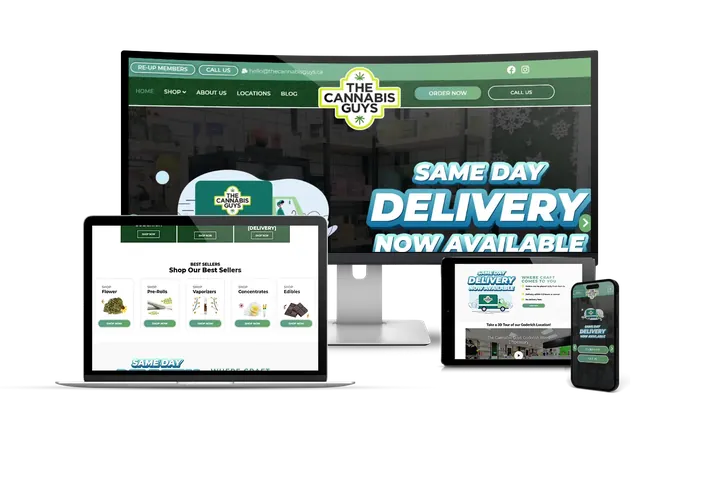
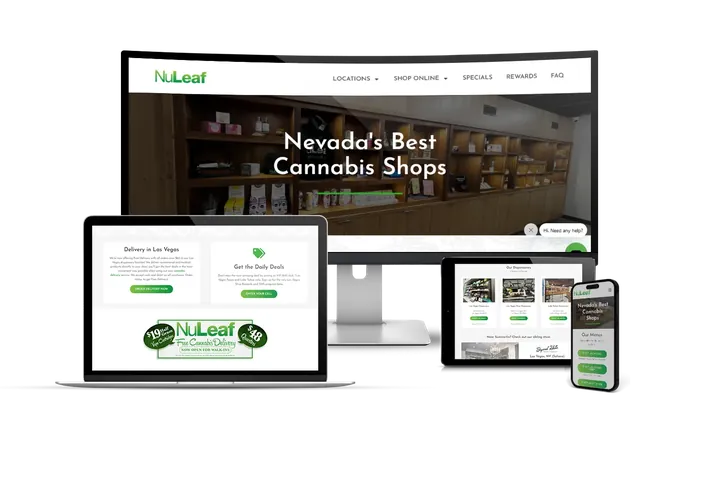
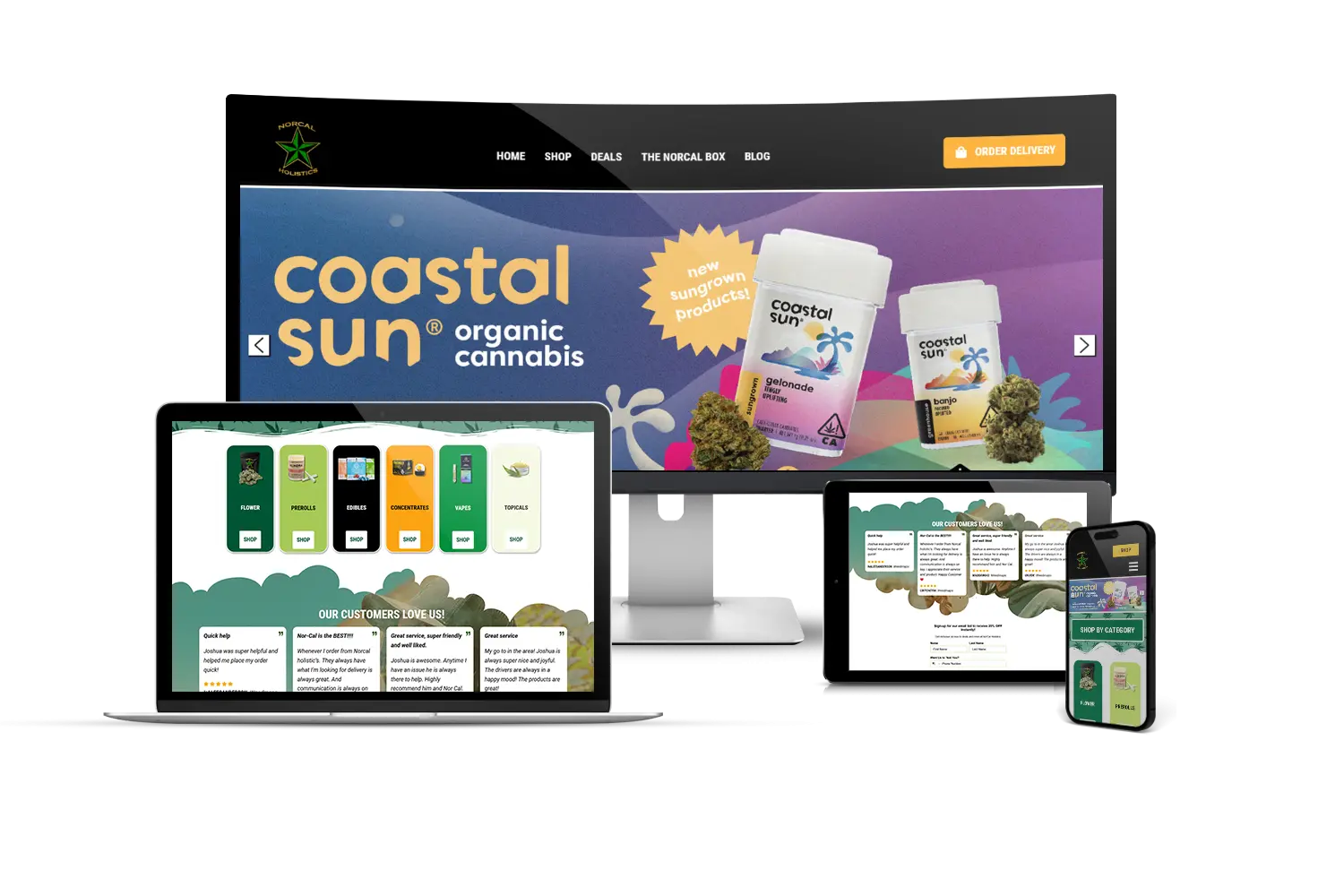
Menu-connected sites built to be updated by staff.
Services
Nobody here is creating buyers, so the retailer who gets found first and remembered longest keeps the share. These twelve do both jobs for yours: three to rank you, four to build the site and the brand, three to bring her back, two to run the numbers, all on one contract, and the plans below show which modules each carries.
Rank
Build
Menu-connected sites on SGEN, updated by staff.
READ MOREMenu, POS, loyalty and analytics talking to each other.
READ MORETurning the traffic you already pay for into orders.
READ MOREIdentity, packaging and creative sized for every placement.
READ MORERetain
Performance benchmarks
Day 0
SoLV Weed Dispensary0.00
Direction Requests291
1 Month
SoLV Increase- Weed Dispensary100.00
Direction Requests Increase+100%
Day 0
SoLV Weed0.00
Direction Requests709
12 Month
SoLV Increase- Weed59.62
Direction Requests Increase+49.08%
Day 0
SoLV Weed Dispensary0.00
Direction Requests181
3 Month
SoLV Increase- Weed Dispensary93.37%
Direction Requests Increase+32.51%
Day 0
SoLV Weed Dispensary0.00
Website Visits291
1 Month
SoLV Increase- Weed Dispensary99.17
Website Visits Increase+100%
The plans
Both plans list every module they fold in, in full. Pricing is scoped to your locations — talk to a rep to get yours.
Most Popular!
Guaranteed results
Modules included
Full Suite
Guaranteed Results + Boost your retention
Modules included
Single-location dispensaries · multi-location dispensaries and MSOs · delivery dispensaries.
Nobody in Vermont is making new cannabis buyers, so every dollar you add this year is a dollar a rival lost. Three figures set the size of that fight, and each carries our move.
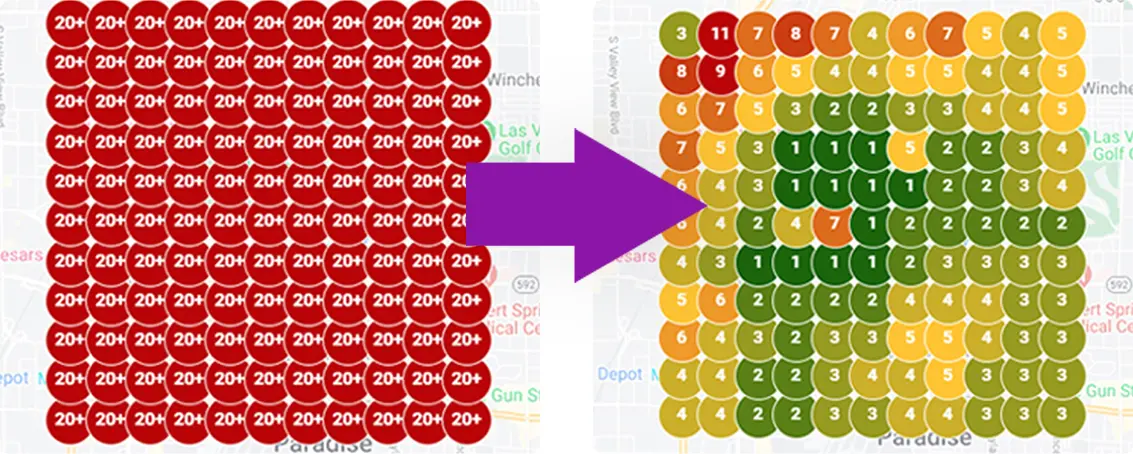
Above, four clients’ day zero against the month, in Share of Local Voice: the share of the local pack a store holds for "Dispensary Near Me" across its trade area.
License figures are the Vermont Cannabis Control Board's own licensing chart of 15 June 2026, published in its executive director report of 24 June 2026: 546 active licenses, of which 110 are retailer, 327 cultivator, 93 manufacturer, 9 wholesaler, 5 propagator and 2 testing laboratory. The count of towns operating a local cannabis control commission is the Board's municipalities list as of 17 April 2026, and the Board cautions that a commission may since have lapsed or that a town may not have told it. Population is the US Census Bureau's Vintage 2024 estimate. The advertising requirements are 7 V.S.A. section 864(c) and the Board's advertising guidance, read on 7 September 2026; the licensing, municipalities and population sources were read on 9 September 2026. No statewide retail sales figure and no town or county store count is stated here, because neither could be verified against the Board's own record.
110 retail licenses, one fixed pool.
The Cannabis Control Board counted 546 active licenses on 15 June 2026, and only 110 of them put a name on a retail door. Spread across 648,493 residents, that leaves no growth to ride: the shopper you want already buys somewhere, and she changes her mind the moment she searches and taps one of the three names the map shows first. Putting your pin in that three, for an agreed keyword set and radius, is what we guarantee.
Every advertisement waits for the Board.
Vermont requires every advertisement to be submitted to the Cannabis Control Board before it runs, qualifying social posts included, and no more than 15% of the audience may be expected to be under 21. So a placement costs you a queue before it costs you a dollar, and the ranking work behind your Google Business Profile, your own site and the list you own keeps earning while it waits. Those are the surfaces we run for you on one contract, and every submission goes on the same calendar.
Forty towns, forty separate maps.
Retail is opt-in here, so a town must allow it before anyone trades, and 40 towns have voted to run a cannabis control commission whose sign-off comes on top of the state license. So who opens near you is settled town by town, and so is the map: a Burlington shopper never sees a Rutland City pin, because the pack is drawn around the person searching. Which name comes up first inside your radius is what we sell: your keyword set, your rank grid and a monthly report, with the guarantee written to that grid, never to the state line.
Most dispensaries rent their marketing from four vendors and hope the pieces talk to each other. They rarely do.
Only 110 of Vermont's 546 active cannabis licenses are retailer licenses, so the field a shopper actually chooses between is a fraction of the license count, and renting four separate vendors to fight over a field that small is the expensive way to fight it.
You know the rules you sell under better than any agency does, so this page does not restate them. If you want the references, both are in the library: dispensary advertising rules by state and cannabis marketing compliance.
Your stack is rented from four vendors.
A marketplace listing, a menu vendor, a loyalty or SMS tool and a generic retainer, each with its own login. Fix: one platform (SGEN) and one agency, with the site, the menu and the campaigns in one place.
Local SEO is an upsell tier elsewhere.
The work that puts you in the local pack for "Dispensary Near Me" is often gated behind the top plan. Fix: ranking work is included from the first dollar. Localized on-page SEO, 100+ off-page profiles and Google Business Profile management are in both plans.
Menu traffic leaks to marketplaces.
A shopper who finds your store on a third-party listing is that listing’s customer. Fix: menu-connected SGEN sites keep the order on your domain, with staff updating the menu themselves.
Four invoices, four account managers.
Nobody owns the result. Fix: one point of contact, one monthly report showing what ran, what it cost and what it returned.
Web design and development are included — no separate build fee.
Local SEO, menu-connected websites, email, SMS and loyalty under one contract.
New Frontier Data (2026-06-21) put one operator’s cost per new customer at about $23. So we manage the channel that costs the least per visit: the local pack.
Our currency is Share of Local Voice (SoLV) for "Dispensary Near Me" — the share of local-pack visibility your store holds for that search across its trade area, reported with its window and case page.
The twelve services above are the same in every market; what changes for you here is the scope, and in Vermont it is never the state but the towns you draw from. Your keyword set, your radius and your monthly report are built to that trade area, and the top-three guarantee is written to the same scope.
Vermont licenses cultivators, manufacturers, retailers, wholesalers, propagators and testing laboratories, and no separate delivery class sits on that list, so no delivery block is written for this market; if delivery is part of how you trade, bring it to the demo call and we scope the service-area grid to it there.
If you run one shop.
Your town chose to allow retail and its neighbor may not have, so the field you actually fight is the licensed retailers a shopper in your radius can reach, not the whole state list. We scope the work to that map: your keyword set, your Google Business Profile, pages built around what your shoppers type, and a rank grid across the radius they come from, with Share of Local Voice for "Dispensary Near Me" reported point by point every month. Burlington, Rutland City, Winooski, Essex Junction and Stowe each run a commission of their own and no two of them share a map, so a rank held in yours is share taken, and the report shows it rather than burying it in a flat sales line. See marketing for the single-location dispensary.
If you run several.
Every town you trade in decided separately to allow retail, and 40 of them run a cannabis control commission whose sign-off you need before the doors open, so no two of your locations sit on the same map. The program we run mirrors that shape: one SGEN domain with a store selector, one page and one Google Business Profile per location, one citation set per address, and a roll-up report with a row per location, so a shop holding its position and one quietly losing it are never averaged into a single line. The guarantee is written the same way, per location, per keyword set, per radius. See marketing for multi-location dispensaries and MSOs.
A short license list and a fixed pool of buyers change what is worth paying for here. Six of those pressures, what each costs you at the till, and what we do about each, under a written top-three local ranking guarantee scoped to an agreed keyword set, radius and window. Each links its guide if you want the method before you book.
Marketing here is a submission queue before it is a campaign
Vermont requires every advertisement to reach the Cannabis Control Board before it goes out, qualifying social posts included, and the warning language has to appear exactly as written and stay clearly visible. That turns a fortnight of creative into a fortnight of creative plus a queue, and a retailer who has not planned for the queue loses the promotion window, not the placement. The workflow in the guide is the one we run for you: a submission calendar, one asset set built to carry the required language, and your site, profile and list earning while a placement waits its turn. See the guide: cannabis marketing compliance.
The audience cap is a buying spec, not a warning
No more than 15% of the audience for a Vermont placement may be expected to be under 21, and the Board's warning language has to run with it, clearly visible. Read as a restriction that is a nuisance; read as a spec it tells you which inventory you can buy before you spend a month finding out the dear way. It also tells you where the money goes first: to the map, to your own site and to the list you own, where the audience is people already searching for what you sell rather than one you buy and prove. We run all three for you on one contract. See the guide: dispensary advertising rules by state.
Three pins decide a market this size
Vermont has 110 retail licenses and no way for any of them to make a new buyer, so the whole contest is which name a shopper taps when the map returns three. That position is won on profile completeness, categories, hours, photographs, products and the questions people actually ask, and it is held by working the profile every week rather than claiming it once and leaving it. We do that work for you and report the map point by point, so you can see the pins you hold and the ones a rival is holding against you, month over month. See the guide: Google Business Profile for dispensaries.
The one position that does not get dearer as the field fills
Every retailer that opens in your town bids against you for the same buyers, and buying attention gets dearer as the field fills. The three local-pack positions do not price that way: they are won on on-page work, profile completeness and citations, and they cost the same to hold whether Vermont adds licenses or loses them. Dispensary SEO and the profile work are how we take that position for you, and the order those jobs run in is fixed, because doing them out of order wastes the year, which is why it is the first thing we start. See the guide: the dispensary SEO guide.
In a pool this small the second visit is the whole business
Vermont has 648,493 residents and is not making more, so the buyer you win once is the only one you get to win twice. The return visit is worth more here than in a market where new arrivals paper over the shoppers who drift away, which makes the list you own the one asset a rival cannot rank away from you: points wired into your POS, the email that carries them and the SMS that lands the same day. It is a relationship rather than a position, we build and run it for you, and it is what separates our two plans. See the guide: the dispensary loyalty program guide.
Four invoices, one small till
A marketplace listing, a menu tool, a texting platform and an agency retainer each bill you the same in Vermont as they would in a state ten times the size, because the price is set on features rather than on the buyers you can reach. So the flat cost of renting your stack eats a larger share of a smaller till, which makes it the first line worth cutting here. What each rented piece costs, from dated third-party sources, is in the guide; our plans put the site, the ranking work and the reporting on one contract, with the web build included and no separate build fee. See the guide: what dispensary marketing costs.
New to hiring an agency? Read the dispensary marketing guide or browse all dispensary marketing guides.
Do you guarantee rankings?
A written top-3 local ranking guarantee — Dispenza’s own offer; the keywords, radius and time window are set in your agreement (see terms). Terms apply. Ask for the guarantee terms on your demo call before you sign anything. The guarantee covers the local keyword set agreed for your trade area, over a defined window.
Which platform are the sites built on?
Built on SGEN — the platform every one of Dispenza’s 500+ dispensary sites runs on. SGEN is Dispenza’s in-house website platform, so the team that hosts your site is the team running your campaigns. Menu-connected sites are built to be updated by staff.
What does it cost?
Pricing is scoped to your locations and both plans above list every module in full, with the site build included and no separate build fee. A quote for your store count takes one demo call. See how pricing works.
Vermont is a small state. Is a market this size worth marketing spend?
It is worth exactly what taking share is worth to you. Nobody here is making new buyers, and a retail list this short means the shopper you want is already loyal to somebody else. That is the argument for spending on the two surfaces that move her, the local pack she searches and the list you own, rather than on reach you have to buy, submit and prove. We run both on one contract and report what each returned every month.
Every advert has to go to the Board first. Does that change how you would run our marketing?
It changes the order, not the ambition. Because a placement cannot run until the Cannabis Control Board has it, the work that earns while the queue moves has to be running first: your Google Business Profile, the pages on your own site, and the list you own. So we start there, keep an asset set on file that already carries the language the Board requires, and put every submission on the same calendar as the campaign. You are never waiting on an inbox for a month of marketing to happen.
Forty towns run their own cannabis control commission. Can one program cover the state?
No, and anything sold to you as statewide is selling a map that does not exist. A town has to opt in before retail is possible at all, and where a town formed its own commission there is a second sign-off before you open, so Burlington and Rutland City are not one market and never share a pack. Each of your locations gets its own keyword set, its own profile and its own rank grid, scoped to where it actually trades. The reporting rolls up; the work does not.
Our website and our social posts — do those go to the Board too?
Your site has to be age-gated, and a social post that qualifies as an advertisement is submitted like any other, so both are decisions you make at the build rather than at the deadline. We build the age gate in, keep the Board's required language on the assets that carry it, and put your budget behind the position a shopper sees before she reads anything: your Google Business Profile, the pages on your own site and the list you own. That position is what the written top-three guarantee covers, scoped to the keyword set, radius and window in your agreement, and we walk you through the terms on the demo call.
How many retailers am I actually up against?
Fewer than the state figure. The Board counted 110 retailer licenses on 15 June 2026, but a shopper in one town never sees a pin from a town at the other end of Vermont: the pack is drawn around the person searching, so the fight that matters to you is the retailers inside your own radius. We count those on the demo call by drawing the rank grid for your trade area, and what we promise is scoped to that grid rather than to the state.

Book straight into the calendar. Bring your store count and your address; you leave the call with a quote scoped to your locations and the guarantee terms to read before you sign.
More markets
Every market page is written to its own store count and its own map, and the guarantee is written to yours.
Where the doors are, by licensed cannabis retailers: Burlington 12, Rutland 6, Morrisville 5, Brattleboro 4, Montpelier 4, Barre 3, Derby 3, Essex Junction 3, Springfield 3, Waterbury Center 3, White River Junction 3, Winooski 3, Woodstock 3, Barton 2, Bennington 2, Brandon 2, Fair Haven 2, Manchester Center 2, Middlebury 2, Milton 2, Pittsford 2, Waitsfield 2, Wilmington 2, Windsor 2 and 33 more. Every number here is counted from Vermont Cannabis Control Board - Licensed Cannabis Establishments & Employees Data Portal (live, daily-refreshed licence report), cross-checked against the CCB Medical Dispensary Information list, read 2026-09-10. If your city is on that list, the fight for its map is already running.
Long-term relationships built on trust, transparency, & results
We get it, the digital marketing and cannabis industries don't always have the most dependable people to rely on. That's why at Dispenza, we back up what we say with results.